

- The SEC has subpoenaed Goldman Sachs, JPMorgan, Citigroup and Bank of America for information about loans made to Situational Awareness, the AI-focused hedge fund that lost 67% in July.
- Regulators are examining the fund’s leverage, the timing of trades that triggered margin calls and communications between the banks and the fund.
- The case is drawing wider attention because it shows how concentrated AI bets can become a financial-stability risk when large amounts of borrowed money are involved.
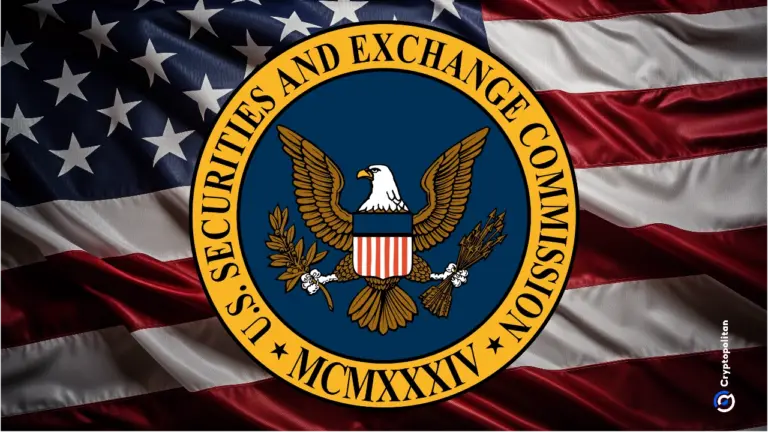
The U.S. Securities and Exchange Commission (SEC) has issued a subpoena to Goldman Sachs, JPMorgan, Citigroup, and Bank of America for their loans to Situational Awareness, the hedge fund that is focused on AI and saw its value drop by 67 percent in July. A source with knowledge of the issue provided this information to Reuters on August 24.
For investors and firms that are part of the AI boom, the probe by the SEC isn’t just about an individual fund’s alleged wrongdoing. It is looking at some borrowing practices used to intensify investments in firms such as Micron and SanDisk, as central banks continue to caution that being highly leveraged with a particular set of AI shares might threaten global financial stability.
What the SEC is actually asking for
The regulator is seeking information about the timing of the trades that triggered margin calls, as well as the banks’ communications with the fund over how much leverage it was carrying, according to Reuters, citing a person familiar with the matter. The New York Times first reported the subpoenas.
According to Reuters, just because there’s an inquiry does not mean that enforcement action will occur, and a request for records doesn’t indicate that any of the banks are a target. Situational Awareness expects this level of scrutiny.
“It is to be expected that regulators would closely examine any funds that are high profile, produce significant returns, or have particularly dramatic drawdowns,” the fund said in a statement, adding that it would cooperate fully. The SEC and all four banks declined to comment.
How a 439% winner became a margin-call casualty
Leopold Aschenbrenner, once a researcher at OpenAI, is the one in charge of the fund, as reported by Cryptopolitan. In 2024, he had made a name for himself with an essay about the competition around artificial general intelligence. A report from RCK Analytics had claimed that the fund started operating in 2024 and made a profit of 439% during the first half of 2026 using nearly four times the leverage.
As of the end of June, SanDisk and Micron collectively represented 55% of its $20.24 billion U.S. stock portfolio, as stated in the fund’s second-quarter 13F filing.
Soon afterward, stocks of companies related to AI saw downward trends. Philadelphia Semiconductor Index decreased almost 30% from its maximum recorded rate in June; shares fell between 35% and 47%, while three important brokerage companies, Goldman and JPMorgan included, demanded more payouts.
Situational Awareness sold off its whole public equities portfolio to Citadel, which is owned by Ken Griffin, as it was unable to fulfill its obligation to meet the margin calls.
Aschenbrenner said in a letter to investors, as quoted by Reuters, that “we came closer to permanent capital impairment than is acceptable to us.”
Why the AI market is watching this one
The unwind exhibited how quickly a focused AI wager can change when leverage comes into play. Citadel, which oversees around $77 billion, has subsequently sold more than 80% of the shares it acquired, concluding nearly 100 block trades worth in excess of $4 billion, according to a letter to Citadel’s investors seen by Reuters.
As per a report published on August 17, in The Wall Street Journal, Aschenbrenner was reported to be handling assets worth $100 billion at his best times, much of which was raised through loans, as he attempted to liquidate almost all of the shares of pre-IPO Anthropic overnight with the banks closing down on him.
Yet demand based on the initial investment thesis has remained intact, with Micron posting the highest ever third-quarter revenue of $41.46 billion and memory prices continuing to rise, Cryptopolitan reported. The financing structure is what failed.
This distinction, that the thesis may have been correct but the structure was unable to take the hit, represents a risk that regulators ranging from the Bank of England to the Bank for International Settlements had already been warning about. According to the BIS, the failure of Archegos in 2021 should act as a reminder of how the leveraging of non-bank funds can easily disrupt the overall financial system.
If you're reading this, you’re already ahead. Stay there with our newsletter.
FAQs
Which banks did the SEC subpoena over Situational Awareness?
Reuters reported the SEC sent subpoenas to Goldman Sachs, JPMorgan, Citigroup and Bank of America, seeking information on the fund's trades, its use of leverage and the banks' communications with it.
How much did Situational Awareness lose, and what did it do?
The fund's portfolio fell 67% in July after a selloff in AI chip stocks, and it was forced to sell its entire public equities book to Ken Griffin's Citadel to meet margin calls, according to Reuters and Cryptopolitan.
Does the SEC inquiry mean the banks are being investigated?
No. Reuters reported that a regulatory inquiry of this type does not necessarily lead to enforcement action, and that requests for information alone do not mean any of the firms are targets.
Disclaimer. The information provided is not trading advice. Cryptopolitan.com holds no liability for any investments made based on the information provided on this page. We strongly recommend independent research and/or consultation with a qualified professional before making any investment decisions.

Micah Abiodun
Micah Abiodun makes good use of his Environmental Engineering and Management (MSc) at Tallinn University of Technology (TalTech) to polish content and price prediction news at Cryptopolitan. Now on his 7th year in the crypto media space, he covers major cryptos, altcoins, DeFi, stablecoins, macro trends, and emerging tech.