



- Monaco’s government submitted a bill to replace its 2022 crypto law and align with the EU’s MiCA regulation and FATF standards.
- The change would route all crypto-asset providers through CCAF authorization and expand the regulator’s powers.
- Monaco is trying to shed its FATF grey-list and EU high-risk status.
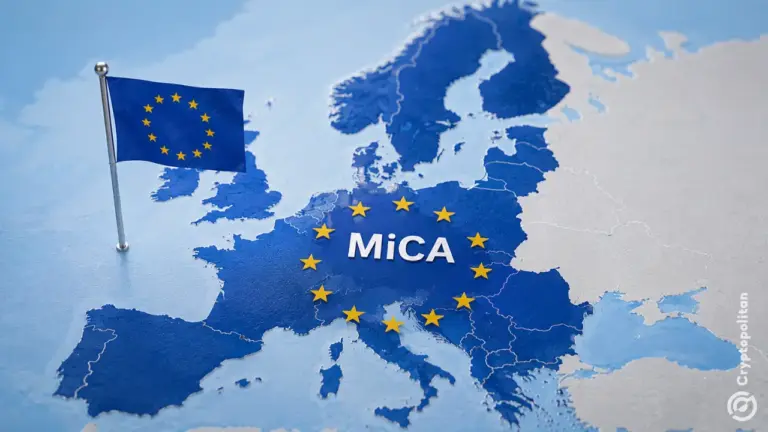
Monaco’s government is attempting to scrap the Principality’s 2022 crypto law and rebuild its rules for crypto-asset service providers around the European Union’s Markets in Crypto-Assets Regulation (MiCA).
The government filed Bill No. 1131 in early August, and if approved, it would change the licensing requirements for firms that offer crypto services, while the regulators will receive wider powers.
Has Monaco updated its crypto laws?
Monaco’s government has filed Bill No. 1131, which would repeal the 2022 law that split crypto and digital-asset work into issuance and operational services cleared by the State Minister, and crypto-linked investment services authorized by the Commission de Contrôle des Activités Financières (CCAF).
Under the 2022 law, providers were forced to register a company inside Monaco and foreign firms were banned from cold-marketing to residents.
The proposed change would require any firm wanting to offer crypto-asset services to gain clearance from the CCAF, but prior to that, the firm would have been reviewed by the Autorité Monégasque de Sécurité Financière and the Agence Monégasque de Sécurité Numérique.
The bill lists exactly which crypto services are allowed in Monaco and sets clear rules for how companies must run their operations, manage risks, and behave professionally. It also gives the CCAF more power to oversee and penalize firms, which the government says will help stop money laundering and other financial crimes.
Why is Monaco complying with MiCA?
Blockchain intelligence firm TRM Labs found that firms that have not been authorized by MiCA are far more likely to carry a high or severe risk rating.
Monaco has sat on the Financial Action Task Force (FATF) grey list since the summer of 2024, and was added to the European Commission’s list of high-risk money-laundering jurisdictions more than a year ago.
The country’s alignment with MiCA is in hopes that it gets taken off these lists, as designations like this can result in slow international transactions, raised compliance costs and even increase borrowing costs for local businesses.
However, only 281 of 1,343 crypto service providers operating across the European Economic Area have secured MiCA authorization.
If you're reading this, you’re already ahead. Stay there with our newsletter.
FAQs
What is Bill No. 1131 and when was it submitted?
Bill No. 1131 is Monaco's proposed law to overhaul the rules for crypto-asset service providers; it was filed with the National Council on August 6, 2026, and would replace Law No. 1.528 of July 7, 2022.
Does the bill make Monaco part of the EU's MiCA regime?
No. Monaco is not an EU member, so the bill draws on MiCA and FATF standards and tailors them to the Monegasque model rather than adopting the EU regime directly.
Why is Monaco changing its crypto rules now?
The government cites the sector's rapid growth and shifting international rules, and the reform comes after Monaco was placed on the FATF grey list in summer 2024 and the European Commission's high-risk money-laundering list.
Disclaimer. The information provided is not trading advice. Cryptopolitan.com holds no liability for any investments made based on the information provided on this page. We strongly recommend independent research and/or consultation with a qualified professional before making any investment decisions.

Hannah Collymore
Hannah is a writer and editor with nearly a decade of blog writing and event reporting experience in the crypto space. At Cryptopolitan, Hannah contributes to the news page, reporting and analyzing the latest developments in DeFi, RWA, crypto regulation, AI and frontier tech industries. She graduated from Arcadia university with a degree in Business Administration.