






- Robinhood Wallet and Fomo let users buy memecoins by card without a separate KYC step at checkout.
- The Block found some purchases coded as digital goods rather than crypto transactions.
- Chase challenged the classification, while Crossmint says its approach is valid for eligible digital collectibles.
Two applications for digital trading now allow users to purchase memecoins with credit card, a minimal level of knowledge about cryptocurrency, and no additional forms for identification verification required at checkout, all through a code commonly used in the world of media for payment.
The discovery was made by The Block, which indicates that this solution may be important since it eliminates one of the main barriers in the path of the retail crypto market — transferring fiat to blockchain within the shortest period of time from one’s phone.
If standard card checkout makes it possible to purchase memecoins in one quick motion, the prospective target audience greatly expands compared to the group of people who are willing to send money to an exchange. However, it seems that this payment method violates one of the card network rules regarding crypto payments, so at least one big bank and one state authority are investigating it.
One tap, no KYC, and the coffee-shop pitch
According to The Block, people using Robinhood Wallet and Fomo can select any token, like dogwifhat (WIF), and make their payments via credit card using Apple Pay or Google Pay.
The usage of either app doesn’t require an additional know-your-customer (KYC) form while making the transactions. The crypto payments company, Crossmint, powering the entire transaction process, transfers the tokens to customers’ wallets directly.
The appeal is convenience. Fomo chief executive Se Yong Park said buying a memecoin should feel no different from paying for morning coffee. Crossmint’s Head of Strategy, Fonz Olvera, told The Block the no-KYC structure is proprietary, calling part of it “secret sauce” and describing the rest as tightly integrating checkout into the mobile app.
Crossmint stated that the results are noteworthy. The company’s report on Fomo integration indicates that active traders increased 7 times within a week after launch, and Crossmint’s setup has already processed the transactions of over 68,000 customers new to cryptocurrencies.
Back in June, the company collected $75 million in Series B, which gave Crossmint a $550 million valuation. Robinhood last month added Crossmint’s payment option into its own wallet.
The code that says “movie,” not “crypto”
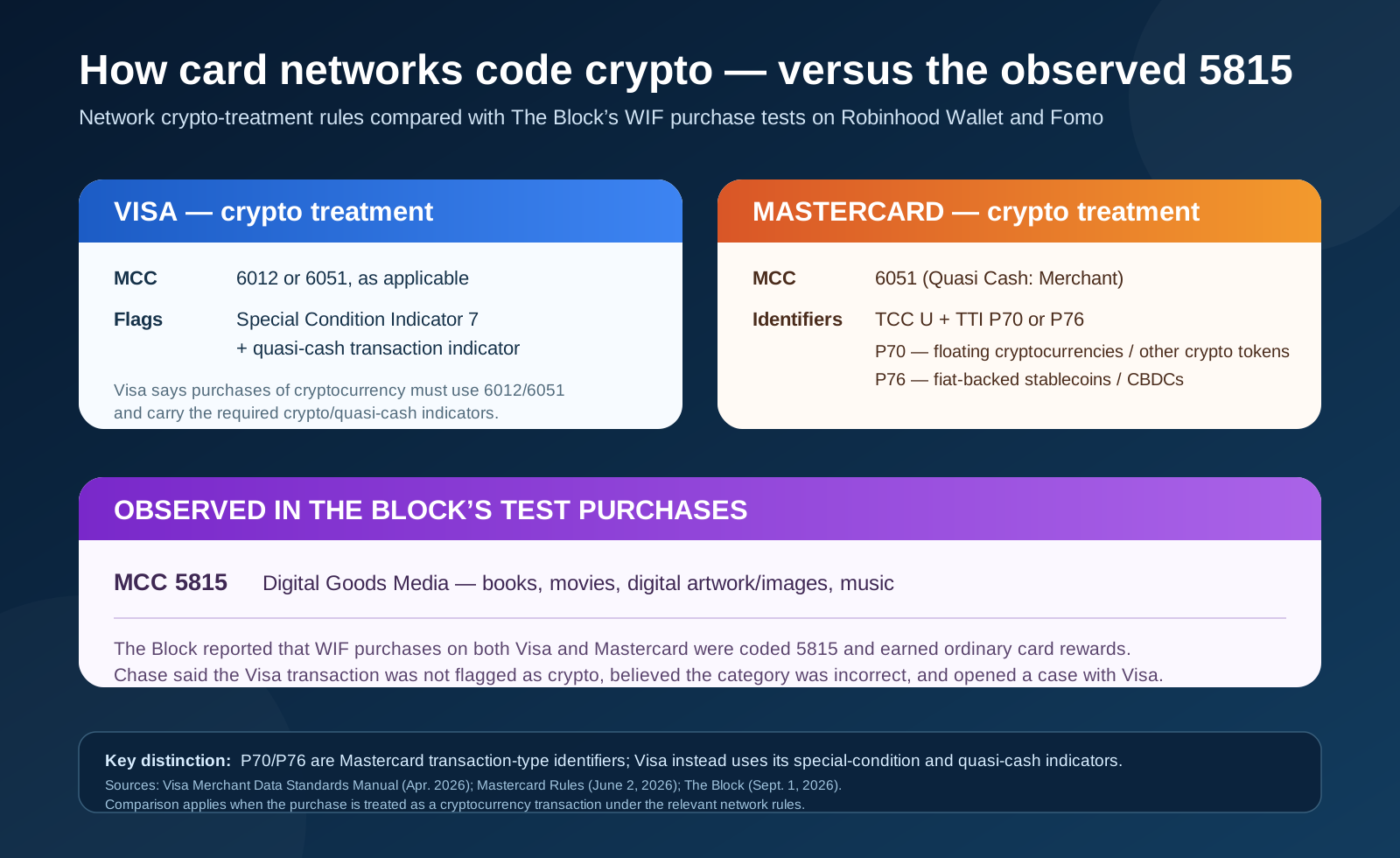
The issue arises from how these transactions are categorized. According to the Block, the transactions showing that WIF was bought with both Visa and Mastercard were assigned the Merchant Category Code (MCC) of MCC 5815.
According to the Merchant Data Standards Manual of Visa, MCC 5815 refers to “digital goods”, it covers “audiovisual media including books, movies, and music.” Moreover, New York purchases also get the customary credit card bonuses.
Transactions in the crypto sphere should look differently. For transactions involving crypto, in Visa’s April 2026 Manual, MCC 6012 or 6051 has to be applied, as well as Special Condition Indicator 7, together with quasi-cash transaction signal.
According to Mastercard’s rules issued in June 2026, crypto transactions are assigned MCC 6051 (Quasi Cash: Merchant) and a transaction category code (TCC) of TCC U, as well as a transaction type identifier of P70 if it involves floating cryptocurrencies and additional tokens, and P76 if it involves fiat-backed stablecoins and central bank-issued digital currencies.
Rewards policies bring an additional complication. The Ultimate Rewards Program Agreement of Chase’s Sapphire Preferred treats cryptocurrency transactions as cash-like. Therefore, they do not qualify as purchases and do not earn points.
Chase explained to The Block that the Visa transaction in question has not been classified as crypto, the category appeared wrong, and hence the points should not have been awarded. A complaint has been filed with Visa. Meanwhile, the New York Attorney General is aware of the situation and is looking into it.
Crossmint’s securities defense, and why it may not settle the question
Crossmint says the 5815 classification was vetted with relevant partners during onboarding and fits eligible digital collectibles. It points to the SEC’s position that some memecoins resemble collectibles rather than securities.
In its February 27, 2025 staff statement, the SEC Division of Corporation Finance said typical memecoins are bought for entertainment, social interaction and cultural purposes, with prices driven mainly by speculation and demand. It described them as potentially “akin to collectibles” and said transactions involving the types of meme coins discussed generally do not constitute securities offerings, while stressing that individual facts still matter.
But securities law and card-network classification are different questions. Payments experts told The Block that a token can fall outside federal securities regulation while still qualifying as cryptocurrency under payment-network rules. Crossmint says its checkout also uses AML monitoring and fraud controls even when customers do not encounter a separate KYC form.
The implications extend beyond two apps. Cryptopolitan reported in August that more than 99% of Robinhood Chain’s trading volume had come from memecoin activity, despite the network’s focus on tokenized stocks.
Making those assets as easy to buy as any other card purchase could draw more retail money into one of crypto’s most speculative corners — while forcing issuers, acquirers and card networks to decide where a “digital collectible” ends and a crypto transaction begins.
If you're reading this, you’re already ahead. Stay there with our newsletter.
FAQs
How can people buy memecoins with a credit card without a crypto flag or KYC?
On Robinhood Wallet and Fomo, purchases run through Crossmint's checkout via Apple Pay or Google Pay and, in The Block's tests, were coded as merchant category 5815 for digital media rather than a cryptocurrency code, so no separate identity verification was required.
Why does Chase say the transaction was categorized incorrectly?
Chase told The Block the Visa charge was not flagged as a crypto purchase and should not have earned rewards; Visa's and Mastercard's rules require direct cryptocurrency buys to use codes 6012 or 6051 with special crypto indicators, so Chase opened a case with Visa.
Does the SEC consider memecoins securities?
No. In a February 2025 staff statement, the SEC's Division of Corporation Finance said typical memecoins are akin to collectibles bought for entertainment and speculation and do not involve the offer and sale of securities under federal law.
Disclaimer. The information provided is not trading advice. Cryptopolitan.com holds no liability for any investments made based on the information provided on this page. We strongly recommend independent research and/or consultation with a qualified professional before making any investment decisions.

Micah Abiodun
Micah Abiodun makes good use of his Environmental Engineering and Management (MSc) at Tallinn University of Technology (TalTech) to polish content and price prediction news at Cryptopolitan. Now on his 7th year in the crypto media space, he covers major cryptos, altcoins, DeFi, stablecoins, macro trends, and emerging tech.









