






Bessent says US could seize $1 billion in Iran crypto this week

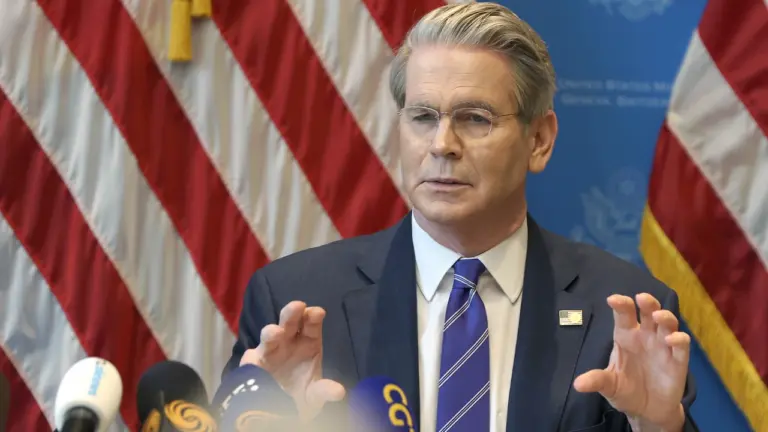
Photo by United States Mission Geneva on Flickr.
- Bessent said the US could seize up to $1 billion in Iran-linked cryptocurrency this week.
- The figure is close to twice the roughly $550 million Tether says it helped freeze all year.
- Bessent continues to target Iranian assets, ranging from oil to crypto as part of Operation Economic Outcast.
Treasury Secretary Scott Bessent put a target on about $1 billion in Iranian-linked assets parked in cryptocurrency, telling reporters that the United States government already knows where the assets are held and could move on them within a week.
Frozen funds, while they remain under the control of the Iranian-held addresses, cannot be transferred or redeemed.
The Treasury secretary did not provide any details about wallets, the legal process, or proof that it has already initiated actions. However, Bessent has a history of delivering on the past deadlines he set for Iranian sanctions action.
Operation Economic Outcast landed on August 24 after Bessent told Newsmax on August 13 that “watch this space for more announcements coming next week because we are going to apply measures like have never been seen in the history of the economic isolation of a country.”
The US Department of the Treasury’s Financial Crimes Enforcement Network (FinCEN) also proposed a rule that would revoke Banque Misr UAE’s correspondent banking access to financial institutions in the United States.
Twice what Tether has blocked all year
The strategy that Bessent described as an “absolute isolation operation” against Tehran “could seize $1 billion worth of cryptocurrency this week.” The figure floated by Bessent is almost double the amount of Iran-linked crypto assets that Tether says it has helped the US freeze this year (roughly $550 million in USDT).
The $550 million in USDT freezes occurred across multiple tranches, including:
- April: More than $344 million frozen from two addresses
- July: Over $130 million from four TRON wallets
Elliptic linked $507 million in USDT directly to the Central Bank of Iran, which the blockchain analytics firm said the central bank was using to prop up a collapsing rial.
A Senate Permanent Subcommittee on Investigations review led by Richard Blumenthal found that 84% of 846 Iran-linked wallets it examined transacted almost entirely in USDT, as Cryptopolitan reported.
Bessent and the US turn up the heat
Bessent’s threat sits on top of Operation Economic Outcast, the Treasury campaign that began August 24. It named digital assets as one of five Iranian economic sectors open to sanctions, alongside technology, gold, aviation and shipping, and it designated nearly 60 entities, individuals and vessels, according to a sanctions analysis by law firm Pillsbury Winthrop Shaw Pittman.
On Thursday, Treasury said the operation had moved against the remnants of Iran’s shadow fleet of oil tankers.
Federal prosecutors also filed a civil forfeiture case in September seeking about $61 million in crypto tied to Iranian oil sales.
If you're reading this, you’re already ahead. Stay there with our newsletter.
FAQs
How much Iran-linked crypto has actually been frozen in 2026?
Tether says it helped freeze roughly $550 million in Iran-linked USDT during 2026, including more than $344 million across two addresses in April and over $130 million across four TRON wallets in July.
What is the difference between a freeze and a seizure?
A freeze stops tokens at a blocked address from moving or being redeemed but leaves them under the holder's control, while a seizure transfers ownership of the assets to the government.
What is Operation Economic Outcast?
It is a US Treasury campaign launched on August 24, 2026, that named digital assets as one of five sanctionable sectors of Iran's economy and designated nearly 60 Iran-linked entities, individuals and vessels.
Disclaimer. The information provided is not trading advice. Cryptopolitan.com holds no liability for any investments made based on the information provided on this page. We strongly recommend independent research and/or consultation with a qualified professional before making any investment decisions.

Hannah Collymore
Hannah is a writer and editor with nearly a decade of blog writing and event reporting experience in the crypto space. At Cryptopolitan, Hannah contributes to the news page, reporting and analyzing the latest developments in DeFi, RWA, crypto regulation, AI and frontier tech industries. She graduated from Arcadia university with a degree in Business Administration.









