






Arkansas sues Kalshi for illegal gambling as Mansour touts midterm wins

- Arkansas Attorney General Tim Griffin sued Kalshi over illegal gambling under the state’s consumer-protection law.
- Kalshi now faces legal challenges across about 20 states.
- The platform processed $1.3 billion in midterm trading volume.
Kalshi has been sued again, as Attorney General of Arkansas Tim Griffin alleged on Wednesday that the platform, by offering illegal gambling to state residents, is operating in violation of the state’s Deceptive Trade Practices Act.
The lawsuit played spoiler as Kalshi’s CEO, Tarek Mansour, paraded the platform’s election markets’ success rate in forecasting the winners of the midterm elections in the United States.
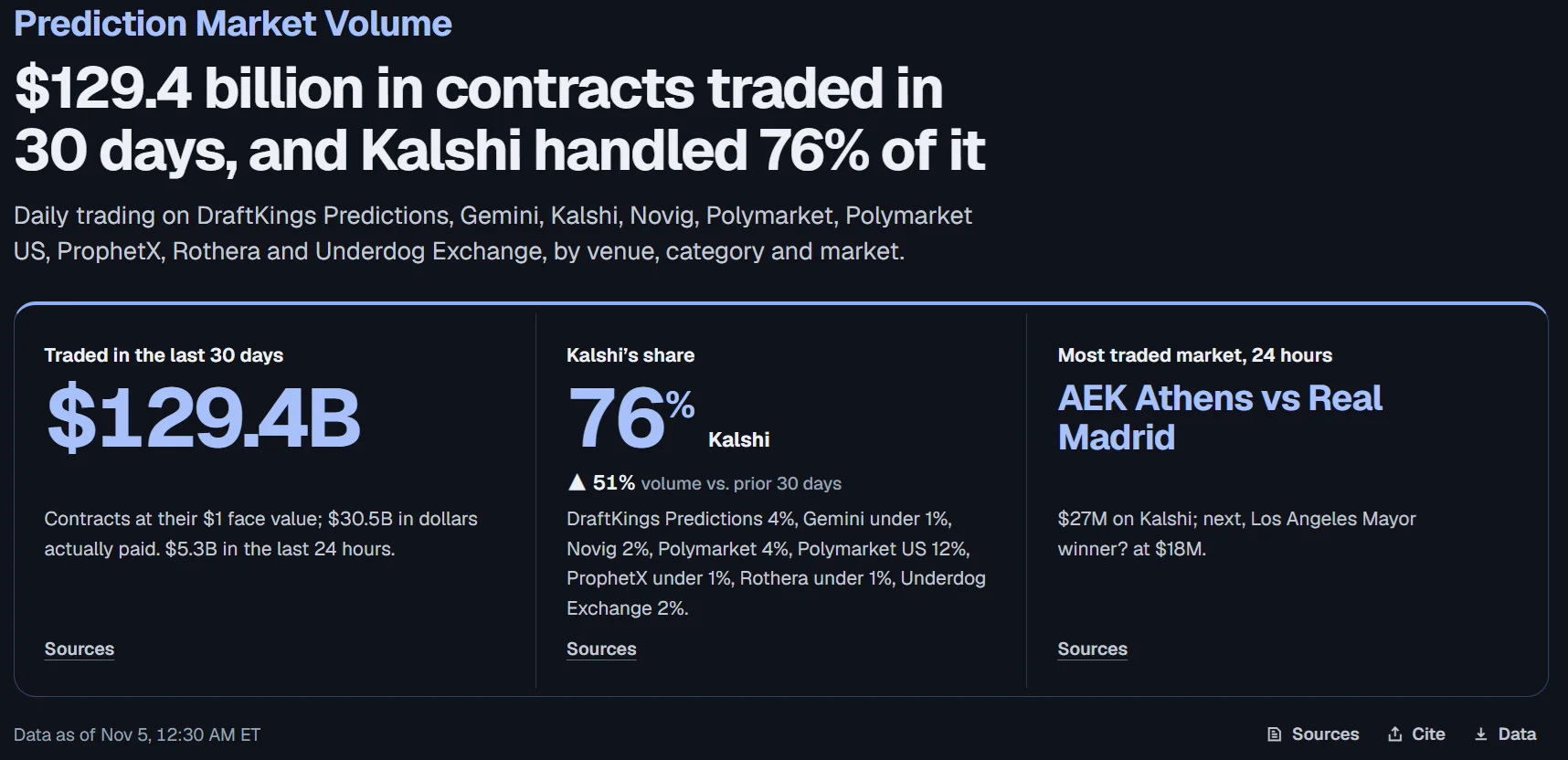
Kalshi is the world’s largest prediction market by volume.
Arkansas AG goes after Kalshi
Arkansas Attorney General Tim Griffin sued KalshiEX LLC and Kalshi Inc. in an Independence County complaint, telling reporters that the state is seeking “restitution, penalties, taxes, and injunctive relief from the platform he described as a “pocket-sized bookie.”
The platform tripped Griffin’s alarms because it avoids obtaining the licenses and taxes required of legal operators in the state, even though it offers markets to Arkansans “as young as 18 years old,” who place real money stakes on sports and entertainment outcomes.
Griffin also pointed to deposit limits, gambling-addiction resources and other self-exclusion tools on the platform to prove the difference between what the company actually is and what it describes itself as. In his words, Kalshi’s “actions speak louder than its labels.”
Griffin also said in a statement that one does not have to be “a genius to understand that wagering money on whether the Razorbacks win or lose is gambling.”
Kalshi has been on the Arkansas AG’s radar since at least October 2025, when Griffin’s office argued that Kalshi or any others that run a similar business model would be violating Arkansas law if they do not hold the required gaming license.
The opinion piece requested by state Senator Bryan King concluded that no platforms are exempt from scrutiny just because they label wagers as “prediction market.”
Mansour’s midterm victory lap
The Arkansas lawsuit landed on the day after US midterm elections, as CEO Mansour took a victory lap for the platform’s odds successfully predicting the winners in 98% of the races it listed.
Mansour wrote on X that “The power to decide what America sees changed hands,” attacking the skepticism of the establishment who doubted the accuracy of prediction markets.
Americans wagered more than $1.3 billion on the midterms through Kalshi. On Tuesday, the platform became a live election hub pulling data from the Associated Press, and its forecast of a Democratic sweep held up. Kalshi recently raised about $1 billion at a $40 billion valuation, even though roughly 80% of its trading comes from sports, the exact category states are suing over.
Kalshi faces lawsuits in 20 states
Before Arkansas moved, Kalshi has been engaged in court battles across state lines, including Utah, Arizona, Nevada and Ohio. Utah went after the platform and its co-founders, Tarek Mansour and Luana Lopes Lara, on 13 felonies and a misdemeanor on October 28, as reported by Cryptopolitan.
Kalshi’s answer is the same everywhere: its event contracts are federally regulated derivatives that sit outside state gambling law. The courts disagree with each other. The Third Circuit sided with Kalshi, while the Sixth and Ninth backed the states, and New Jersey asked the Supreme Court in September to resolve it.
The Commodity Futures Trading Commission (CFTC) has sued states to keep the markets under federal rules. Litigation now touches about 20 states.
Don’t just read crypto news. Understand it. Subscribe to our newsletter. It's free.
FAQs
Why did Arkansas sue Kalshi?
Attorney General Tim Griffin alleges Kalshi ran illegal gambling without a license or paying taxes, violating the state's Deceptive Trade Practices Act, and let Arkansans as young as 18 wager real money on sports and entertainment events.
What is Kalshi's defense against these state lawsuits?
Kalshi says its event contracts are federally regulated derivatives overseen by the CFTC and beyond the reach of state gambling law. Appeals courts have split on that argument.
How much did Americans bet on the 2026 midterms through Kalshi?
More than $1.3 billion, according to the Columbia Journalism Review, with the platform's forecast of a Democratic sweep proving accurate.
Disclaimer. The information provided is not trading advice. Cryptopolitan.com holds no liability for any investments made based on the information provided on this page. We strongly recommend independent research and/or consultation with a qualified professional before making any investment decisions.

Hannah Collymore
Hannah is a writer and editor with nearly a decade of blog writing and event reporting experience in the crypto space. At Cryptopolitan, Hannah contributes to the news page, reporting and analyzing the latest developments in DeFi, RWA, crypto regulation, AI and frontier tech industries. She graduated from Arcadia university with a degree in Business Administration.









