

Apple and Google ship same-day security fixes as crypto wallet attacks mount

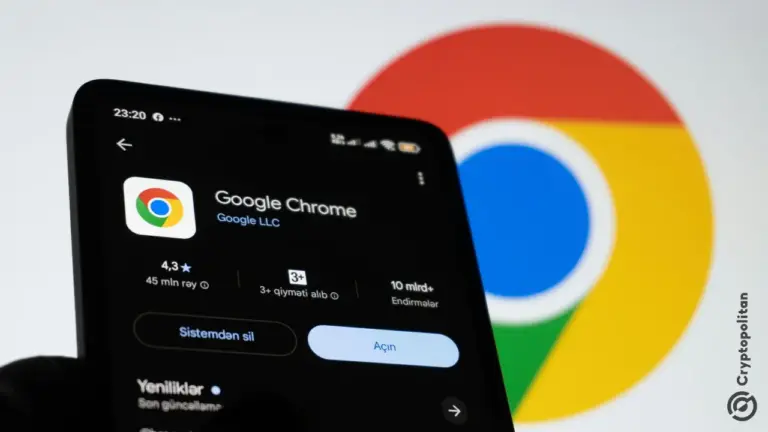
- Apple shipped iOS 27.2.1 and iPadOS 27.2.1, and Google shipped a Chrome Stable update, both on November 9.
- Chrome batch patches an actively exploited zero-day, as iOS exploit kits have targeted wallet apps and recovery phrases directly.
- Updating both the phone and the browser closes the paths those attacks used.
iPhone and Chrome browser users got new updates on the same day as Apple and Google moved to plug security vulnerabilities on two of the most popular platforms among crypto users.
The updates, which landed on the same day by coincidence, are the latest security patches to be applied in a year where exploit kits and wallet drainers have consistently targeted crypto users’ devices.
Google fixes zero-day vulnerability in Chrome
According to the Chrome Releases blog, Google pushed through nine security fixes in its latest update for Windows, Mac and Linux.
One of the flaws that Google fixed, CVE-2026-125350, was already being exploited. The company conceded that fact in a November 6 response to an anonymous report, writing that it “is aware that an exploit for CVE-2026-125350 exists in the wild.”
The security update will roll out to users over the next few days, with some reaching users over the next few weeks. Google urged Chrome users to restart their browsers, as most browsers update at launch.
Has Apple released a new iPhone update?
iPhone users with iPhone 11 or later received iOS 27.2.1 on November 9. Apple also released iPadOS 27.2.1 for the iPad on the same day.
The patch fixes flaws in Messages, Bluetooth and App Intents, including one (CVE-2026-113961) that could allow an attacker to remotely join and read chats on iMessage groups.
Another flaw in App Intents, CVE-2026-113963, could allow attackers to access sensitive user information.
None of the flaws that Apple fixed have been described as exploited in the wild, unlike in the Chrome case. Notably, Apple’s support pages clarify that the iPhone maker does not disclose the details of a flaw until it ships a fix.
Attackers are targeting crypto users with exploits
The patches that Google and Apple published carry major stakes for crypto holders who have been under siege this year.
Attackers have been using the DarkSword exploit chain to steal information from cryptocurrency wallet apps and other personal data since at least November 2025. The flaw disclosed by Google’s Threat Intelligence Group (GTIG) in March spread to iPhones running iOS 18.4 through 18.7 using six vulnerabilities.
A Censys report found servers pairing DarkSword and Coruna to steal data and recovery phrases from wallet apps like Coinbase, MetaMask, OKEx, Phantom and Trust Wallet as of early October.
The update to iOS 26.3 plugged the hold that DarkSword attackers were exploiting.
Attackers are consistently building exploit routes to reach crypto users even while developers are fixing existing software flaws. One of them, found by SlowMist and OKX, implicated the FomoPeek iOS app in the theft of roughly $580,000 in crypto.
A supply chain incident on Trust Wallet led to losses of more than $6 million in December 2025, as Cryptopolitan reported at the time.
In a November 6 blog, Trust Wallet told iPhone owners, especially those who have not updated to version iOS 18.7, to install the latest iOS. The wallet provider also advised iPhone users to update, turn on Lockdown Mode if an update is not possible, and ensure not to store recovery phrases as photos or on notes apps, as exploits are already known to look for such files on their devices.
If you're reading this, you’re already ahead. Stay there with our newsletter.
FAQs
Which Chrome vulnerability is being exploited right now?
CVE-2026-125350, a use-after-free bug in Chrome's XML handling reported anonymously on November 6, is the one Google said has an exploit in the wild. It was patched in Chrome 157.0.8103.50/.51.
What is DarkSword and how does it affect crypto wallets?
DarkSword is an iOS exploit chain, disclosed by Google's Threat Intelligence Group in March 2026, that used six vulnerabilities on iPhones running iOS 18.4 through 18.7 to steal wallet data from apps like Coinbase, MetaMask and Trust Wallet and to scan Photos and Notes for BIP39 recovery phrases. Apple has since patched the flaws it relied on.
What should iPhone holders do to protect their crypto?
Trust Wallet's November 6 guidance is to update to the latest iOS, enable Lockdown Mode if updating is not possible, and never store recovery phrases in photos, screenshots or notes apps.
Disclaimer. The information provided is not trading advice. Cryptopolitan.com holds no liability for any investments made based on the information provided on this page. We strongly recommend independent research and/or consultation with a qualified professional before making any investment decisions.

Hannah Collymore
Hannah is a writer and editor with nearly a decade of blog writing and event reporting experience in the crypto space. At Cryptopolitan, Hannah contributes to the news page, reporting and analyzing the latest developments in DeFi, RWA, crypto regulation, AI and frontier tech industries. She graduated from Arcadia university with a degree in Business Administration.